Footwear
Hiking Boots Guide - How to Choose by Fit, Stiffness, and Terrain
How to choose hiking boots: cut height, midsole stiffness, fit and waterproofing explained by terrain and load, plus when a trail shoe beats a boot.
Published June 7, 2026 · Last updated June 7, 2026
Most people buy too much boot. They picture the worst day - a loaded pack on wet scree - and buy a stiff, heavy mountaineering boot for trips that are mostly maintained trail in summer. Then the boot is overkill, their feet are hot, and they get blisters from a shoe built for a different job.
This page is how to match the boot to the hiking you actually do. For specific models, see the best hiking boots roundup - this is the how-to-choose first.
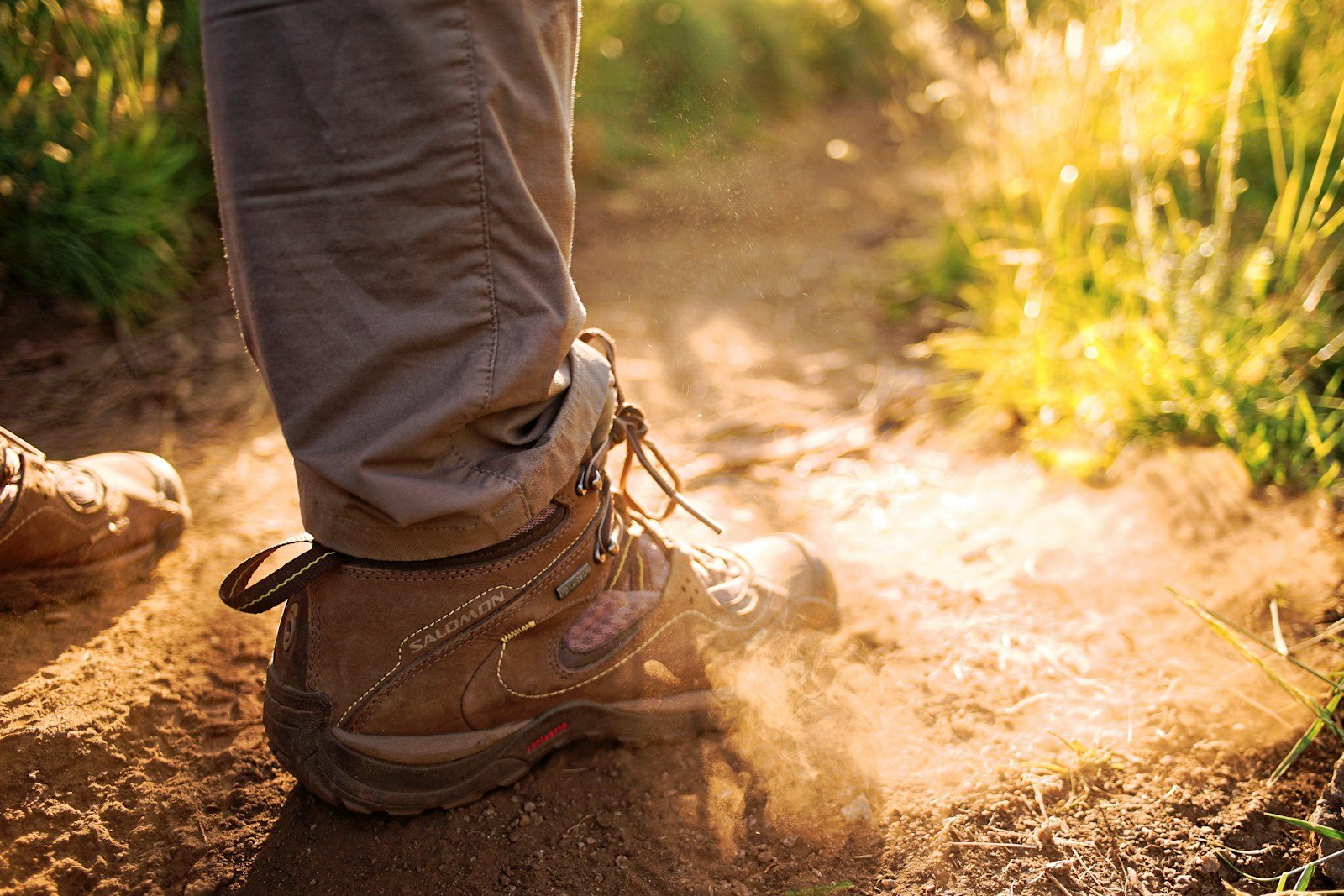
Photo: Fidel Fernando on Unsplash.
Fit is 80% of the decision
A perfectly specced boot that fits badly is a bad boot. Before any feature talk:
- Try them at the end of the day, when your feet have swollen to trail size, with the socks you’ll actually hike in.
- Heel locked, toes free. The heel should not lift when you walk; the toes should have a thumb’s width in front on a flat floor, so they don’t slam the front on descents.
- Kick a slope. Most outdoor shops have a ramp. Walk down it - if your toes hit the front, the boot is too short or the lacing is wrong.
- Width is a real spec. Some brands run narrow, some wide. A narrow boot crushed onto a wide foot causes hot spots no break-in will fix.
If the fit is right, almost any reputable boot works. If it’s wrong, no feature saves it.
Cut height: ankle support, honestly
| Cut | What it does | Use for |
|---|---|---|
| Low (shoe) | No ankle coverage, lightest | Day hikes, light loads, fast pace |
| Mid | Covers the ankle bone, some lateral support | The all-rounder for most hikers |
| High | Full ankle cuff, stiff | Heavy multi-day loads, off-trail rock, scree |
The ankle-support story is half true. A high cuff resists a sideways roll on uneven ground and stops debris, but it does not make weak ankles strong - regular trail time does that. Buy a high cut for load and terrain, not as injury insurance. Most day hikers are better served by a mid cut they can actually walk fast in.
Stiffness: the flex test
Hold the boot and bend it. Where and how much it flexes tells you the job it’s built for.
- Flexible (flexes at the ball of the foot): comfortable for trail and day hikes, less protective on rough ground.
- Half-stiff (flexes a little, with a defined point): the multi-day all-rounder - supports a loaded foot over distance without feeling like a plank.
- Stiff (barely flexes): built for heavy loads, scree, and crampon compatibility. Tiring and clumsy on easy trail.
More stiffness means more support under load and more fatigue on flat ground. Match it to your typical pack weight, not your heaviest-ever trip.
Materials
| Upper | Trade-off |
|---|---|
| Full-grain leather | Most durable and water-resistant, heaviest, longest break-in |
| Nubuck / split leather | Lighter, softer, faster break-in, less durable |
| Synthetic / mesh | Lightest, dries fastest, breathes best, wears out soonest |
Leather lasts years and moulds to the foot but needs care and a real break-in. Synthetic is ready out of the box and dries fast but won’t see a decade. For most people doing a dozen hikes a year, a leather-synthetic mix hits the balance.
Waterproof or not
A waterproof membrane (Gore-Tex and similar) keeps light rain and puddles out - and keeps sweat and over-the-top water in, where it stays for days. The rule:
- Waterproof: cold, wet, boggy conditions; shoulder season; snow. Most Norwegian hiking.
- Non-waterproof (breathable mesh): hot, dry trips, or where you’ll cross rivers and want the boot to drain and dry fast.
A waterproof boot that floods over the cuff is worse than a mesh boot, because it can’t dry. Height of the boot vs depth of the water matters as much as the membrane.
Trail shoe vs boot
For day hikes on maintained trail with a light pack, a trail running shoe is lighter, cooler, and blisters less than a boot. The boot earns its weight in three cases: heavy multi-day loads, sustained off-trail rock, and cold wet multi-day conditions. Don’t default to a boot out of habit.
What the marketing leaves out
Break-in is real for leather, fake for synthetic
A stiff leather boot needs 30-50 km of easy walking before a big trip, or the back of your heel pays for it. Synthetic and lightweight boots are essentially ready out of the box - “break-in” there is marketing. Never take a new leather boot straight onto a multi-day hike.
Resoleable vs disposable
A welted or cemented-but-resoleable boot can be re-soled when the tread wears, doubling or tripling its life. Cheaper boots are glued and disposable. If you hike a lot, a resoleable boot is cheaper per year despite the higher sticker.
The lacing fixes more than you think
Heel lifting? Lock the lace at the ankle hooks (surgeon’s knot) to hold the heel down. Toes slamming on descent? Same. Most “the boot doesn’t fit” problems on a decent boot are a lacing problem first.
Common questions
How long do hiking boots last?
A leather boot: 1,000-1,500 km of tread, longer if resoleable. Synthetic: 500-800 km before the midsole packs out. The midsole dies before the upper looks worn - dead cushioning and extra leg fatigue are the signal.
Do I size up in boots?
Usually half a size over your street shoe, to leave room for foot swell and thick socks and to keep toes off the front on descents. Confirm with the descent ramp test, not a rule.
One boot for everything?
A mid-cut, half-stiff, leather-synthetic boot covers most three-season hiking from day trips to light multi-day. You give up summer breathability and winter warmth at the extremes, but it’s the honest one-boot answer.
Are expensive boots worth it?
Up to a point. The jump from cheap to mid-range buys real durability, fit options, and resoleability. The jump from mid to premium often buys a name and marginal weight savings. Spend on fit and construction, not the logo.
Keep reading
- Best hiking boots roundup - specific models by category
- Trail running shoes guide - the lighter alternative for day hikes
- Merino wool socks - the half of fit that isn’t the boot
- Hiking in Norway: the complete guide - the hub
Claude AI helped me with phrasing and proofreading in this article.